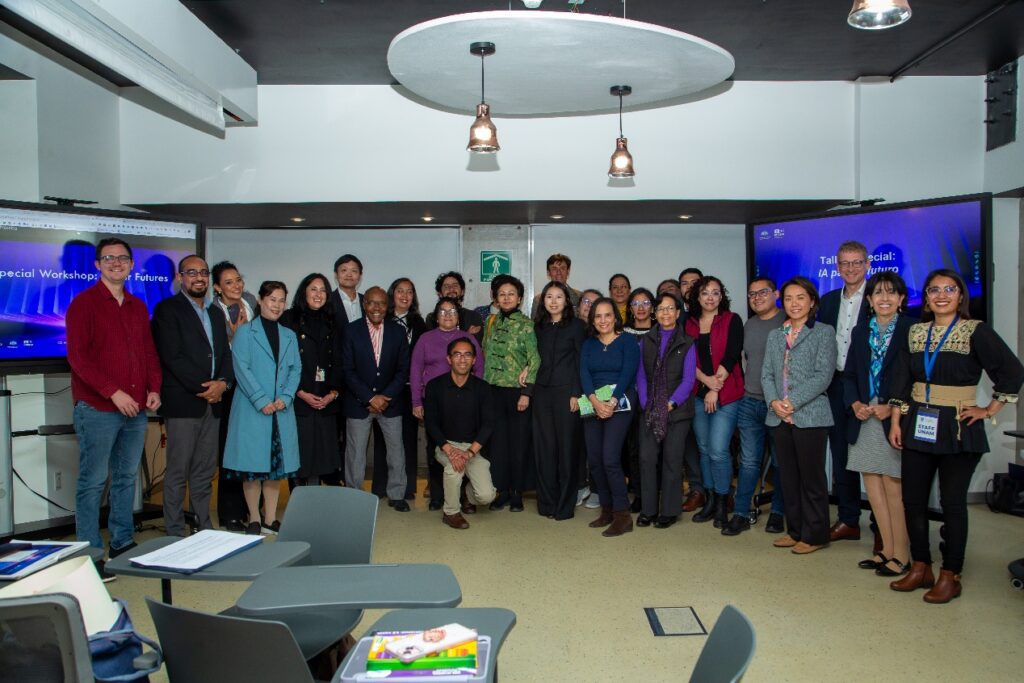

On the afternoon of December 2nd, educators, institutional leaders, and digital education practitioners gathered at the Digital Lab of Coordination of Open University and Digital Education (CUAED) of National Autonomous University of Mexico (UNAM) for the Special Workshop: AI for Futures, a focused dialogue on how higher education can respond to rapid technological, environmental, and social change. With a strong emphasis on justice, sustainability, inclusion, and human dignity, the workshop explored how artificial intelligence can serve not only as a tool, but also as a lens for rethinking curriculum, learning spaces, teaching roles, and assessment systems.
Setting the Vision
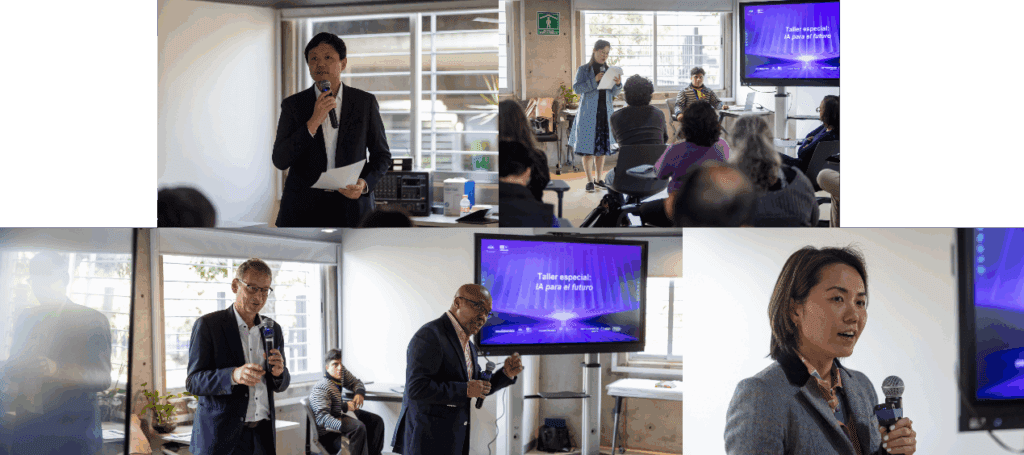
The workshop featured remarks from Prof. Asha Singh Kanwar, Chair of the Governing Board of UNESCO IITE, who situated the discussion within UNESCO’s global mandate to advance access, quality, and inclusion through technology. She noted that the world has entered a moment of accelerated AI adoption, raising fundamental questions for education systems worldwide: whether AI will deepen existing inequalities or help build more just, inclusive, and sustainable futures. She further emphasized that higher education must continue to function as a public common good, with future curricula not merely adding technical AI skills, but strengthening learners’ humanity, values, and social responsibility.
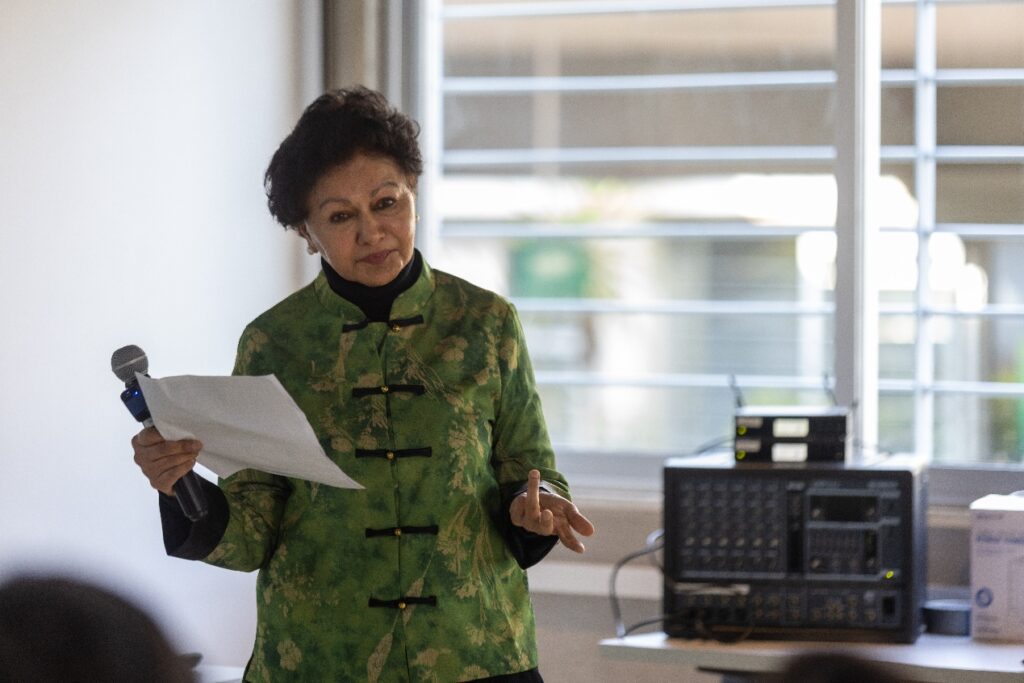
Prof. Asha Kanwar delivering a remark
Case Sharing: Practice from Global and Local Perspectives
In the case-sharing session, Ms. Hongru Li, Assistant Secretary-General of the Global MOOC and Online Education Alliance (GMA) and Manager of the Online Education Center at Tsinghua University, presented Tsinghua University’s systematic practices in AI‑empowered teaching and learning. Framing AI as a catalyst for value transformation in the era of the intelligent revolution, the presentation shared concrete progress of Tsinghua University in exploring how to move beyond traditional time, space, disciplinary, and identity boundaries to cultivate creativity, interdisciplinary integration, and leadership for societal development.
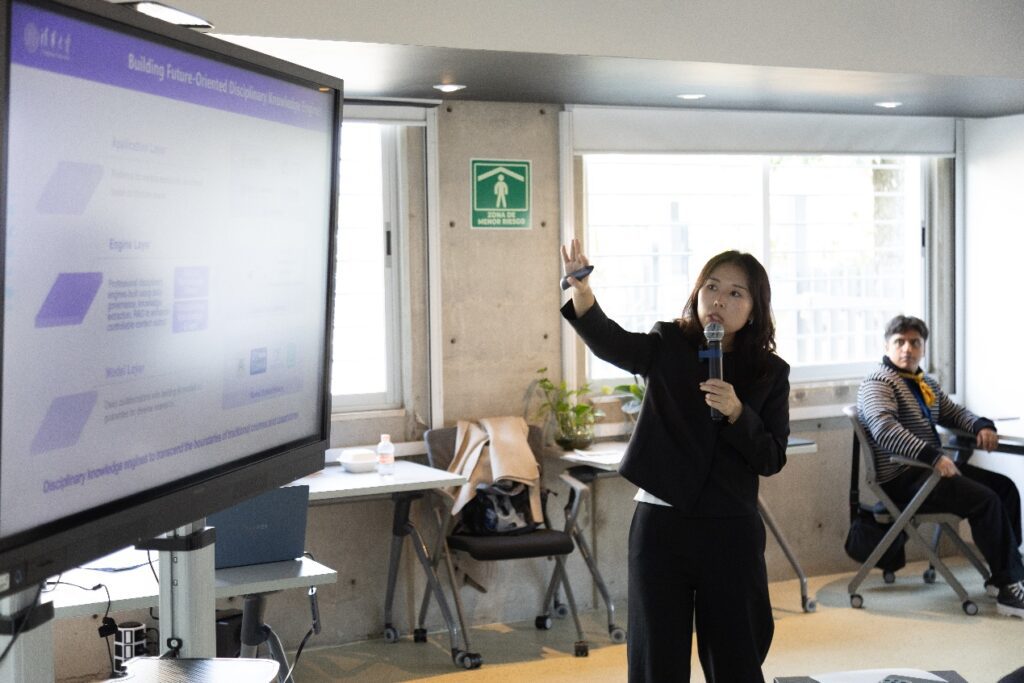
Ms. Hongru Li sharing Tsinghua University’s practices
Jackeline Bucio, Associate Professor at the National Autonomous University of Mexico (UNAM), explored the superficial integration of advanced technologies in open learning environments. She questioned whether AI truly bridges the gap between scalability and intimacy or merely creates a “lonely personalization”. Highlighting the shift from Generative to Agentic AI, she warned against constructing a “Pedagogical Theater” where flawless engagement metrics conceal a lack of human connection. She advocated for a pedagogical model where learners act as active co-creators of knowledge rather than passive recipients of platformized content.
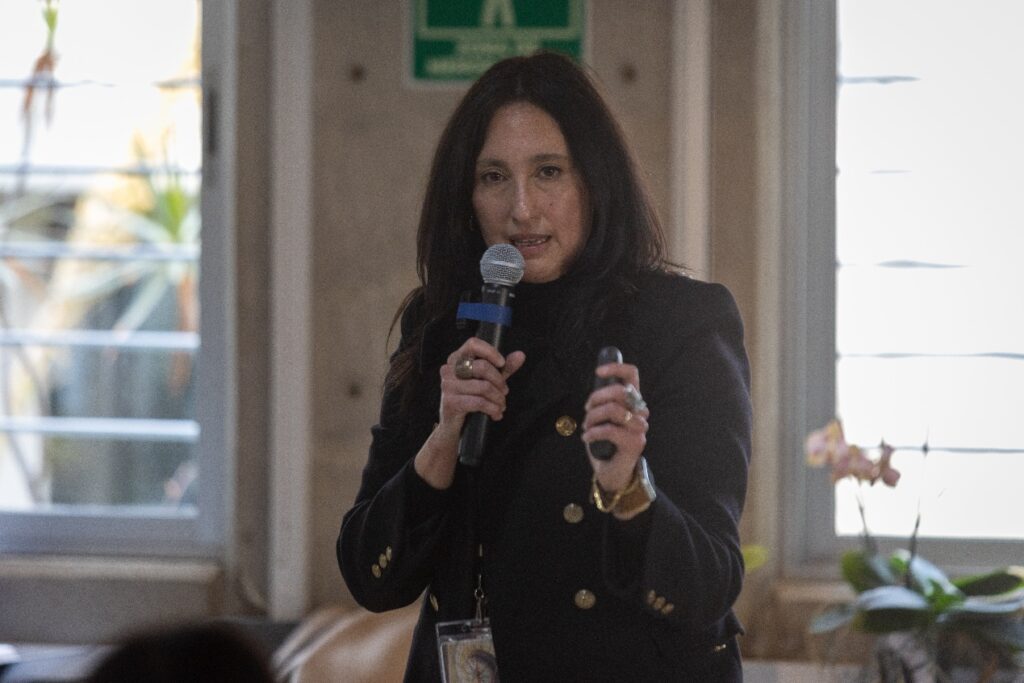
Prof. Jackeline Bucio sharing UNAM’s practices
Following the case-sharing session, five representatives from different institutions were invited to share brief reflections, adding diverse perspectives that further enriched the dialogue on AI, pedagogy, and the future of higher education.
Group Dialogue: Co‑Creating the Future of Higher Education
Participants then engaged in four small‑groups and discussed four key themes:
- Designing curriculum for real‑world readiness, focusing on interdisciplinary learning and essential future competencies beyond disciplinary knowledge.
- Creating learning environments that inspire discovery, exploring how physical and digital spaces can become active hubs for inquiry, collaboration, and creativity.
- Redefining the educator’s role in the age of AI, emphasizing teachers’ unique value as facilitators, mentors, and ethical guides.
- Making learning visible beyond test scores, examining alternative assessment approaches such as learning portfolios, formative feedback, and reflective use of AI.
In addition, three youth leaders around the world: Wiam Ben Karroum from Morocco, Shomy Hasan Chowdhury from Bangladesh, and Juleen. K Gentles from Jamaica brought their own unique and fresh perspectives on how AI is shaping their learning, and their hopes and concerns for the future under diverse backgrounds in video format.
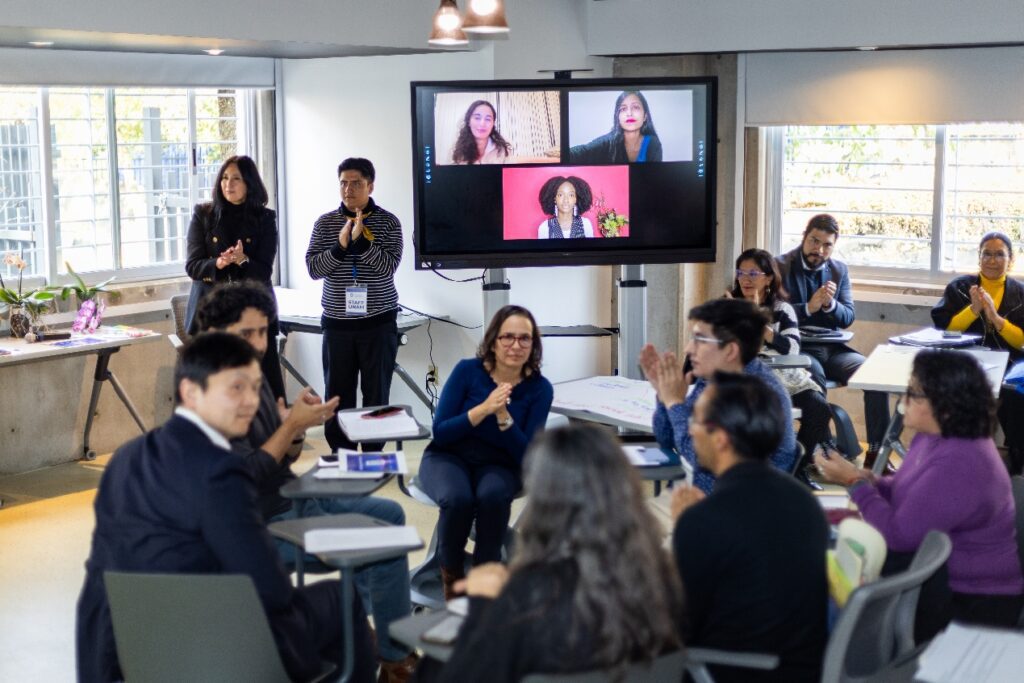
Supported by thematic videos, each group exchanged perspectives, identified shared challenges, and proposed initial ideas for more integrated, learner‑centered, and transparent education systems.
Sharing Insights and Looking Ahead
During the group presentation session, groups reported back on their discussions, revealing strong consensus on the need to move beyond siloed curricula, passive classrooms, and test‑driven evaluation. Participants stressed the importance of empowering educators, redesigning learning experiences around real‑world problems, and using AI responsibly to support reflection, personalization, and lifelong learning.
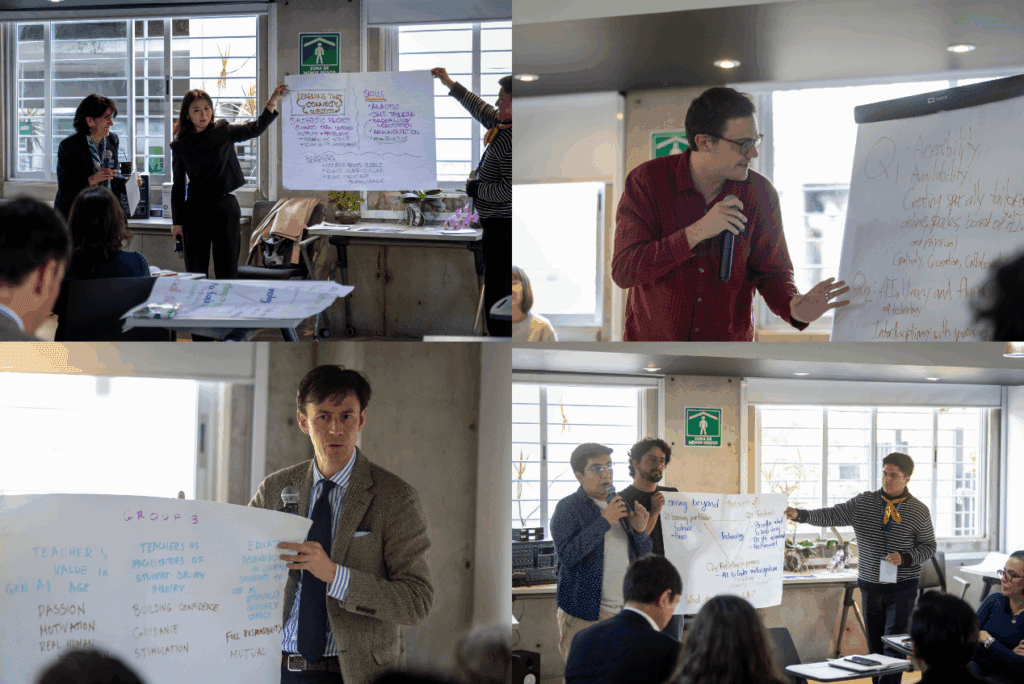
Group Presenting
The workshop concluded with an open floor discussion, where participants shared reflections and reaffirmed the value of international dialogue and collaboration.
The workshop concluded with an open floor discussion featuring a final reflective question: “Use one word to describe the Future University in your mind.” The resulting word cloud—highlighting open, inclusive, creative, flexible, and intelligent. As a collective outcome, the event laid the groundwork for a shared vision of a human-centered, equitable, and AI-enabled future for higher education.
The Special Workshop: AI for Future marked an important step toward reimagining higher education in the intelligence era, reinforcing the role of global cooperation in shaping inclusive and responsible educational futures.